
Why Elevation and Grading Matter in Landscape Design
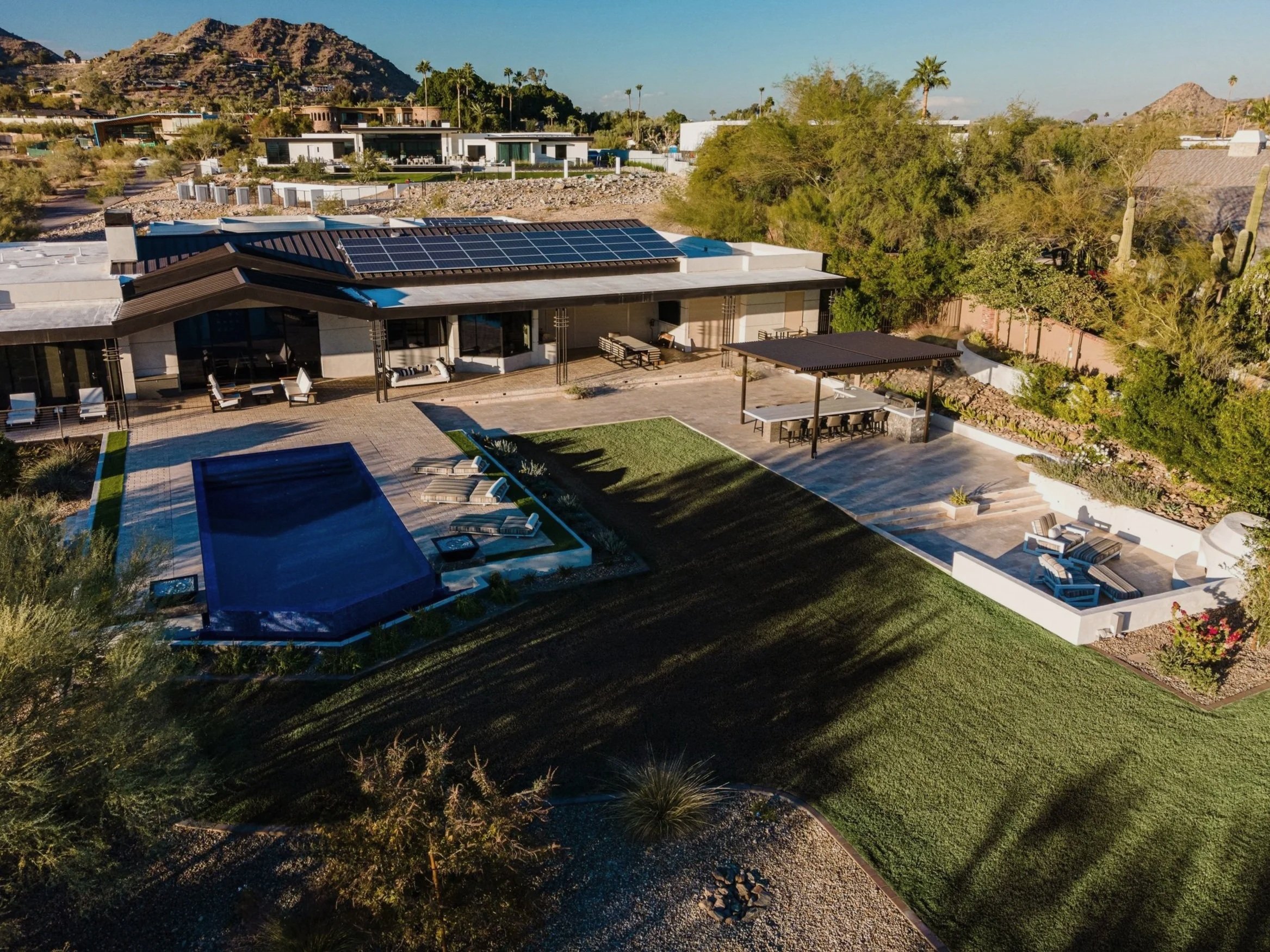
The best outdoor spaces don’t begin with a pool, a pergola, or even a planting plan. They start with the ground itself. Elevation and grading are the invisible framework that make everything else work — guiding water away from your home, shaping how people move through the space, and even setting the stage for dramatic views.
At Shearon Design Collective, we treat grading and elevation as design tools, not just engineering requirements. The result: landscapes that feel effortless, yet are rooted in thoughtful precision.
Grading Creates Flow — For Water and People
Good grading solves two problems at once: drainage and circulation. Water moves where it should, and people do too.
By shaping the ground plane, we direct water away from foundations while also creating smooth, natural transitions between zones like patios, lawns, and pool decks. Done poorly, grading can cause flooding or awkward steps; done well, it feels invisible — just comfort and ease.
Featured Example:
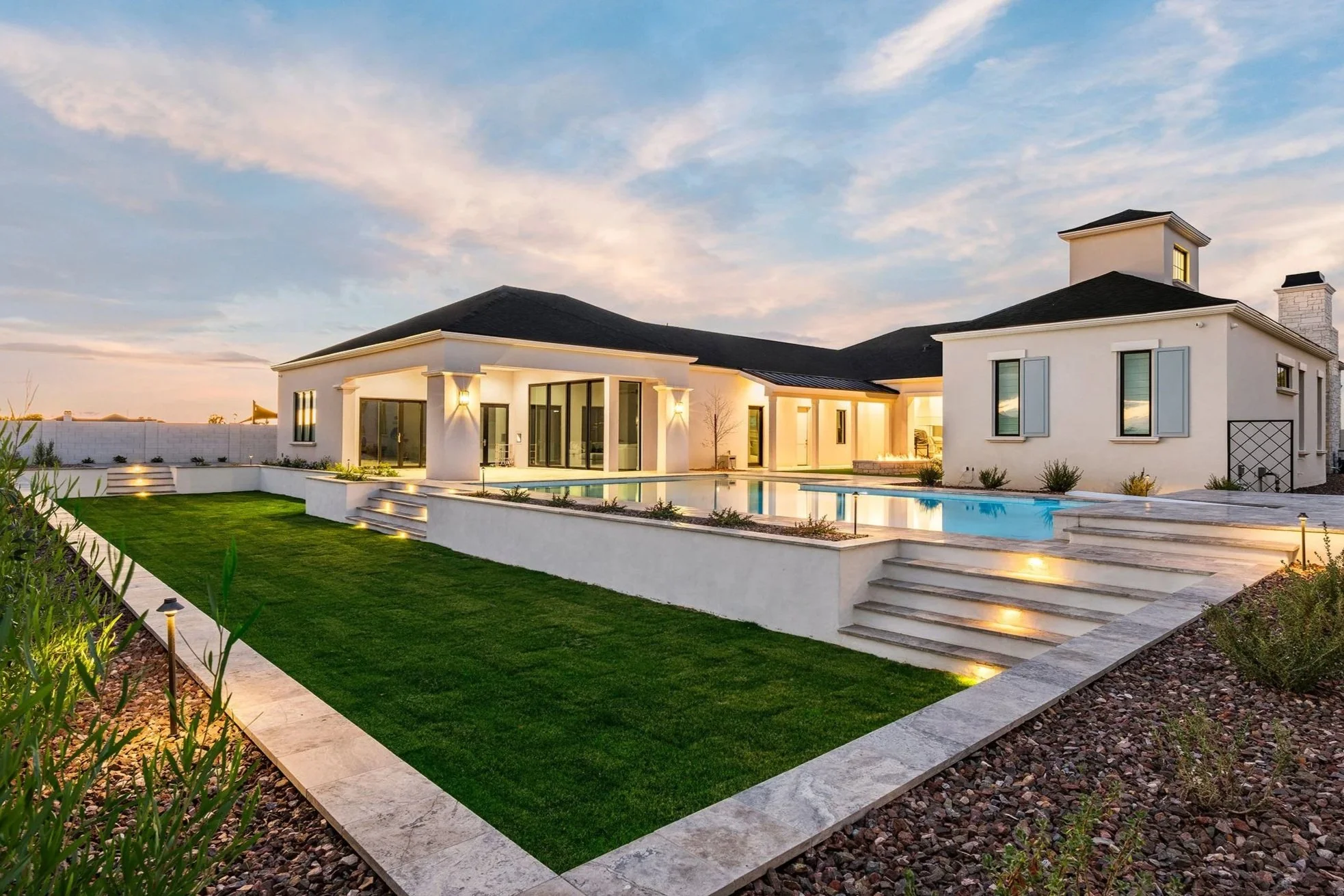
Lush French Estate Landmark at Somerset
– This yard uses subtle grading shifts to keep water flowing off turf and pavers, while preserving a flat, usable entertaining area.
Elevation Enhances Design and Views
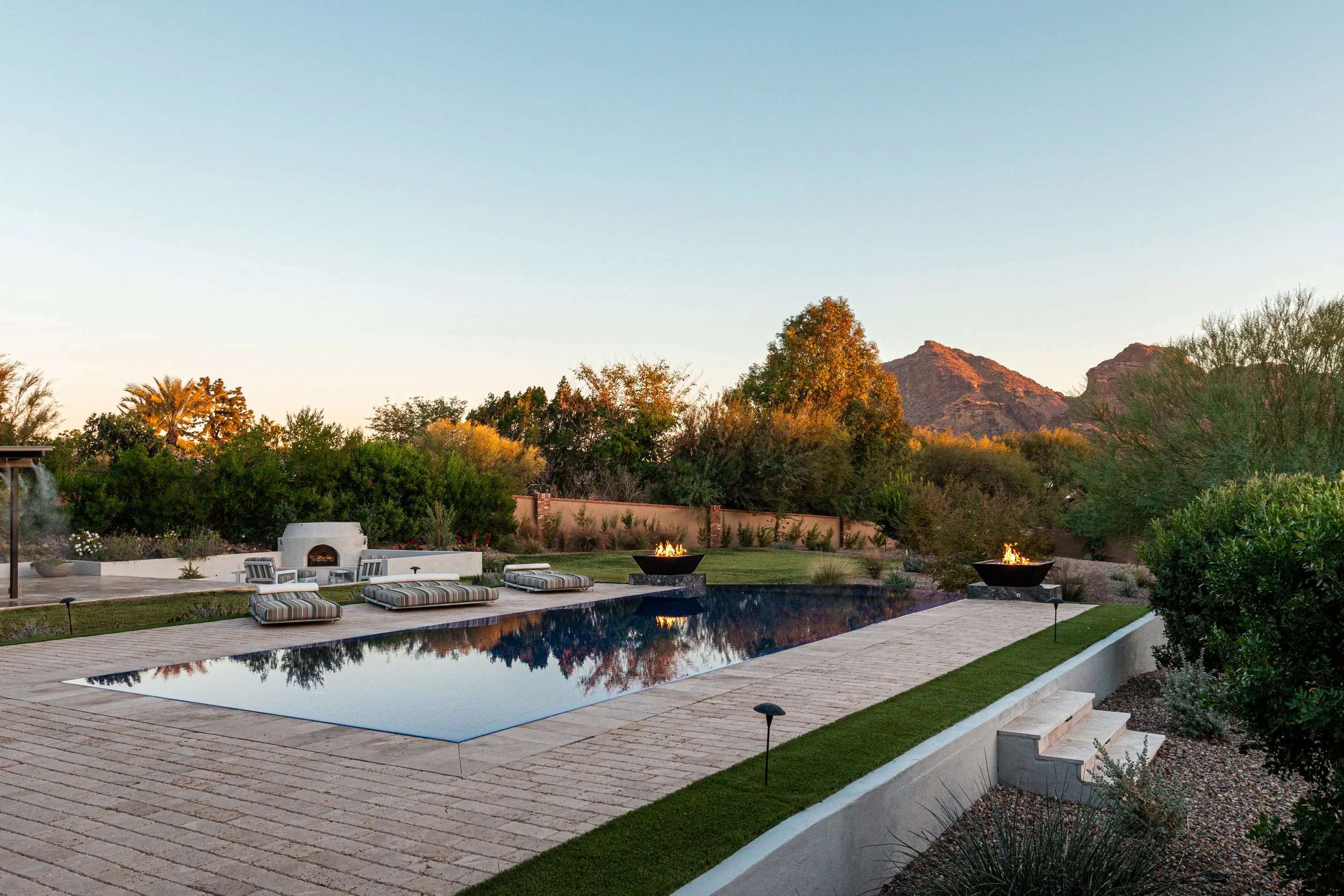
Elevation changes allow us to define spaces, frame views, and introduce drama. A raised deck, a sunken fire pit, or a slightly elevated pool edge can completely transform how you experience the yard.
We often use elevation strategically to highlight a focal point — whether that’s Camelback Mountain in the distance, or the glimmer of a pool at sunset. itself.
Featured Example:
Sweeping Camelback Views in Paradise Valley
– The pool and patios are designed at the perfect elevation to capture mountain views while maintaining functional transitions throughout the yard.
Retaining Walls as Design Elements
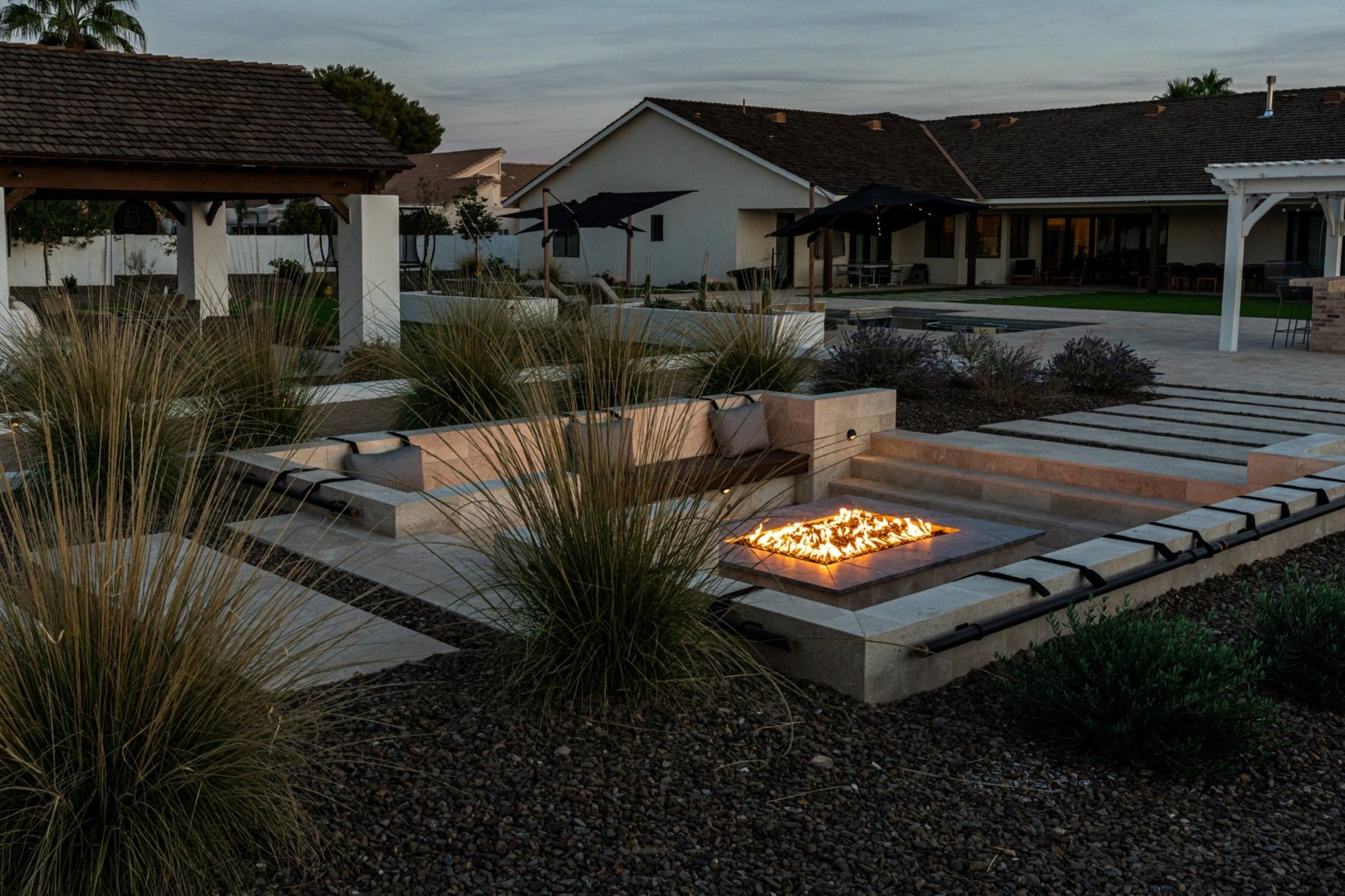
In Arizona’s sloped sites and hillside properties, retaining walls aren’t just structural — they’re opportunities for design. Materials, proportions, and placement matter just as much as engineering.
Well-detailed walls can double as seating, define planting terraces, or even hide utilities, all while adding texture and rhythm to the space.
Featured Example:
North Scottsdale Luxury Backyard with Pickleball & Pool
– A series of retaining walls helped define multiple zones: sport court, pool, lounge, and planting terraces — all integrated seamlessly into the desert.
Collaboration Brings It All Together
Grading and elevation don’t happen in isolation. They’re shaped by collaboration with civil engineers, architects, and builders.
Our role as designers is to translate these technical requirements into spaces that are livable and beautiful. By leading the conversation early, we ensure that drainage solutions and elevation changes are not just practical, but integral to the aesthetic.
Featured Example:
Queen Creek Modern Water Feature Landscape
– Collaboration across disciplines allowed for a water feature and garden design that feel natural while addressing site drainage.
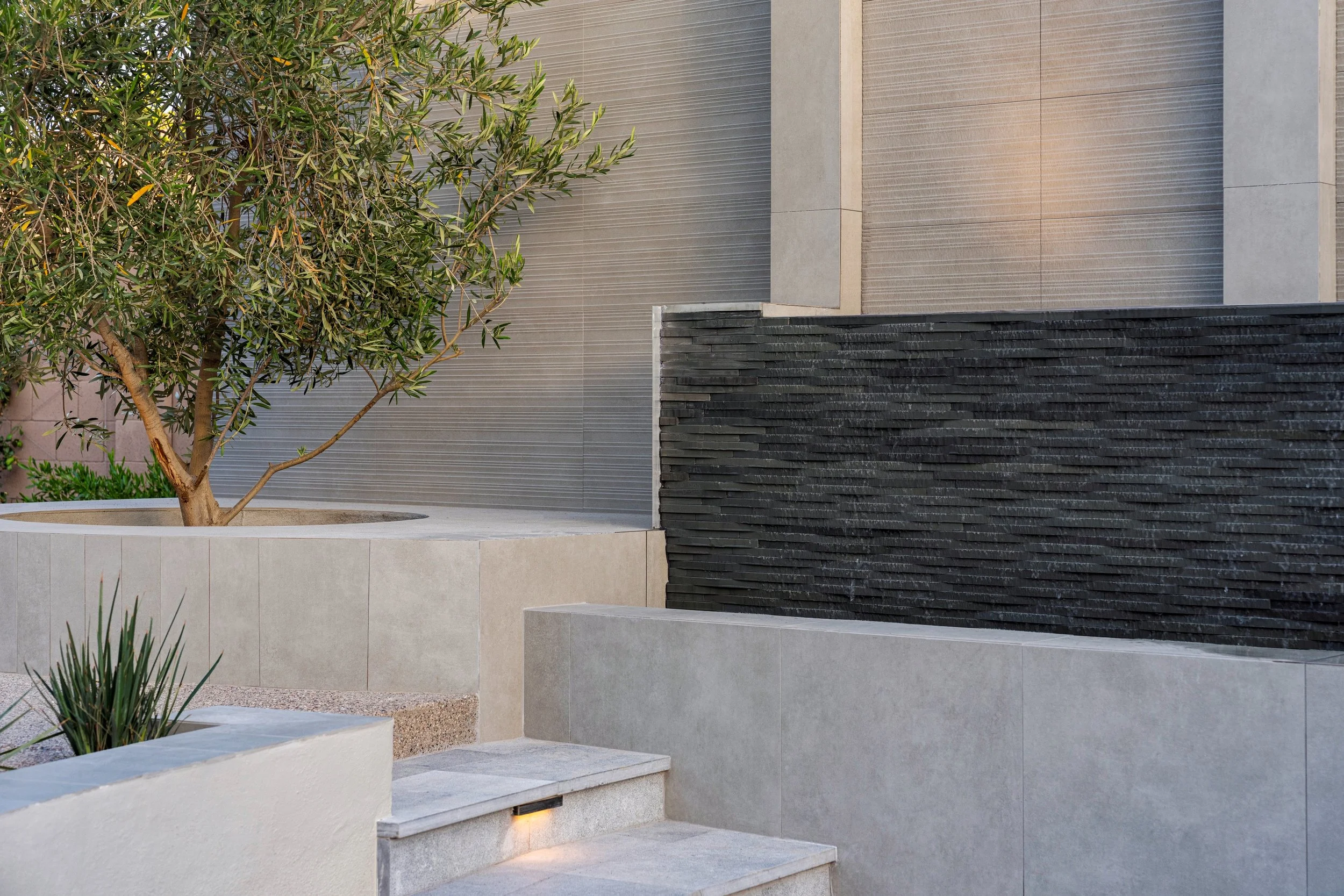
Design Grounded in Precision
Every planting, patio, and pool depends on what happens beneath your feet. Grading and elevation might not be visible at first glance, but they shape everything you experience outdoors.
At Shearon Design Collective, we design with both beauty and performance in mind — so your landscape flows, drains, and lives exactly as it should.
👉 Ready to see how grading and elevation can transform your project? - GET STARTED
Or browse our Completed Projects to see how early design collaboration brings everything together.
